Start with load, runtime, and distance
- List the equipment that must stay live, then group by voltage and phase. Long feeder runs across large distribution interiors add cable loss and affect generator sizing.
- Note continuous hours. Night shift turnover in local industrial sites often means long runtimes; fuel capacity and refueling access matter.
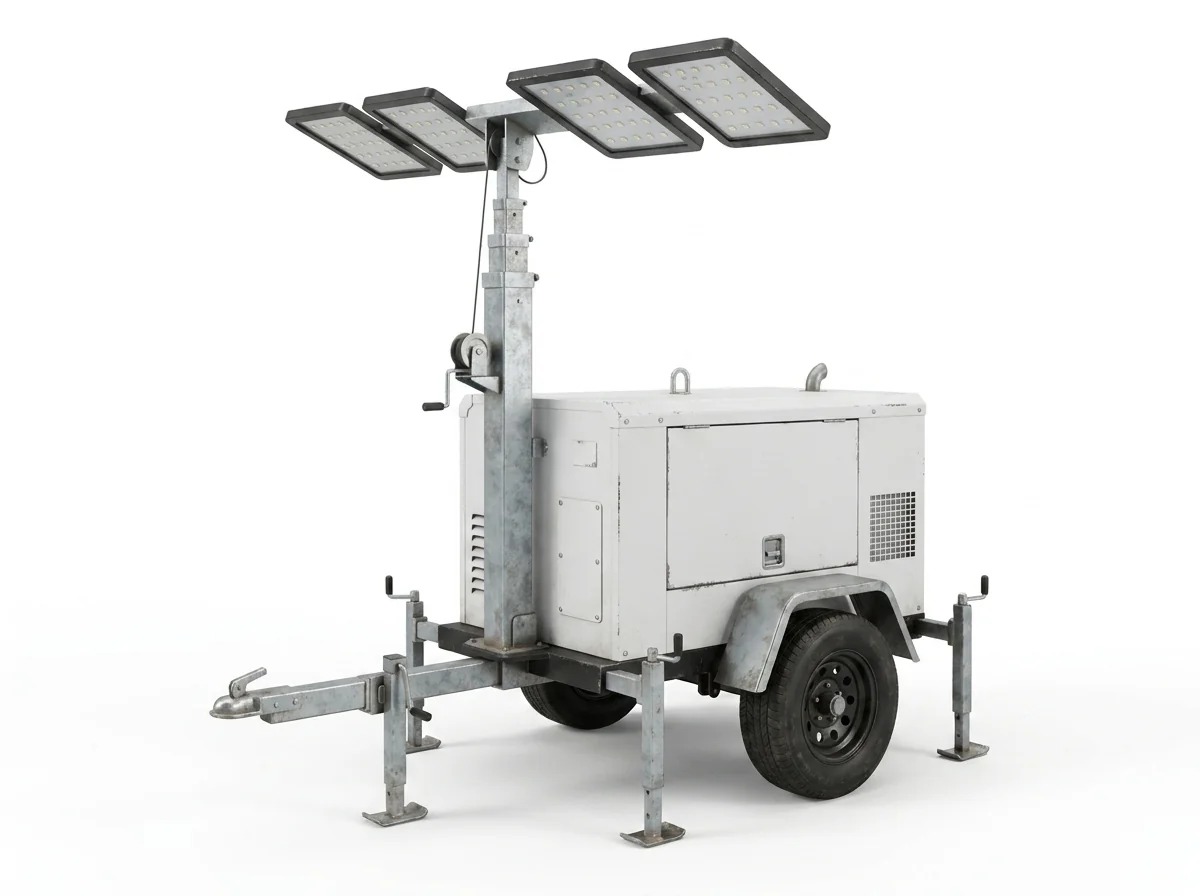
- For light towers, define the work envelope: yard staging, perimeter security, or focused task lighting at loading doors.
Fort Worth site conditions that change placement
- Expansive clay soils can soften after rain. A parked unit on unpaved ground may settle unevenly. A firm, level pad or stabilized surface reduces lean that can skew light aim and fuel pickup.
- Summer heat loads cooling systems. Gensets need clear airflow around louvers and exhaust. Avoid recirculating hot air inside enclosed bays.
- Plains winds push against raised masts and affect perceived light coverage. Wind limits in the unit’s documentation and site procedures govern mast position.
Access route and footprint
- Confirm the drive path from gate to set position. Tight turns between racking, low thresholds, and mixed surfaces can restrict trailer movement.
- Measure the stand-off from doors and air intakes. Exhaust routing and cable protection become harder when the genset must sit far from the panel or task area.
- For towers, check swing clearance and service door access so refueling and lamp service do not block loading traffic.
Narrowing the category
- Indoor maintenance or IT loads near offices: smaller, quieter units with appropriate exhaust routing and clearances.
- Large-bay industrial backup with long runs: step up in capacity to handle voltage drop and motor starts; plan for external distribution where needed.
- Yard lighting for staging or perimeter areas: towers with enough mast height and head adjustability to reduce shadows across truck lanes.
Related aerial access
If power or lighting supports elevated work, compare lift types by surface and height: - Smooth interior slabs: /electric-scissor-lift-rental/ - Unpaved or mixed exterior ground: /rough-terrain-scissor-lift-rental/ - Varied reach around obstacles: /articulating-boom-lift-rental/ or /telescopic-boom-lift-rental/
Local planning notes
Alliance-area logistics yards and aerospace facilities often run overnight maintenance windows. That pattern favors equipment with longer runtime planning, protected cable paths across active lanes, and lighting layouts that avoid glare for drivers entering docks.