Define the control goal and traffic mix
- Separate heavy equipment from pedestrians near storefront projects, or establish long truck queues at industrial sites. The expected pressure on the line changes panel weight and connection strategy.
- Identify entry points. Service gates for forklifts differ from narrow walk-throughs used by visitors.
- Note nearby obstructions: utility corridors, drainage swales, and uneven grades interrupt straight runs and need transitions.
Fort Worth conditions that affect stability
- Expansive clays soften and shift after rain. Uneven bearing can tilt panels or create gaps at the base on unpaved ground.
- North Texas winds can push against long, uninterrupted runs. Wind exposure and the unit’s guidance inform spacing and stabilizing methods; site procedures govern final setup.
- Heat drives dust and debris across open yards, which can collect along fence lines and affect footing.
Layout near active work
- In logistics corridors, long perimeters should respect truck turning radii and dock approach cones. Avoid pinching lanes at guard points.
- In historic-area retail blocks, plan for narrow sidewalks and consistent storefront access during daytime peaks.
- For aerospace or high-security zones, pair fence lines with defined sightlines so monitoring teams can see approaches clearly.
Narrowing panel and accessory choices
- Short-term crowd direction on hard surfaces: modular barricades that handle frequent reconfiguration and tight sidewalk turns.
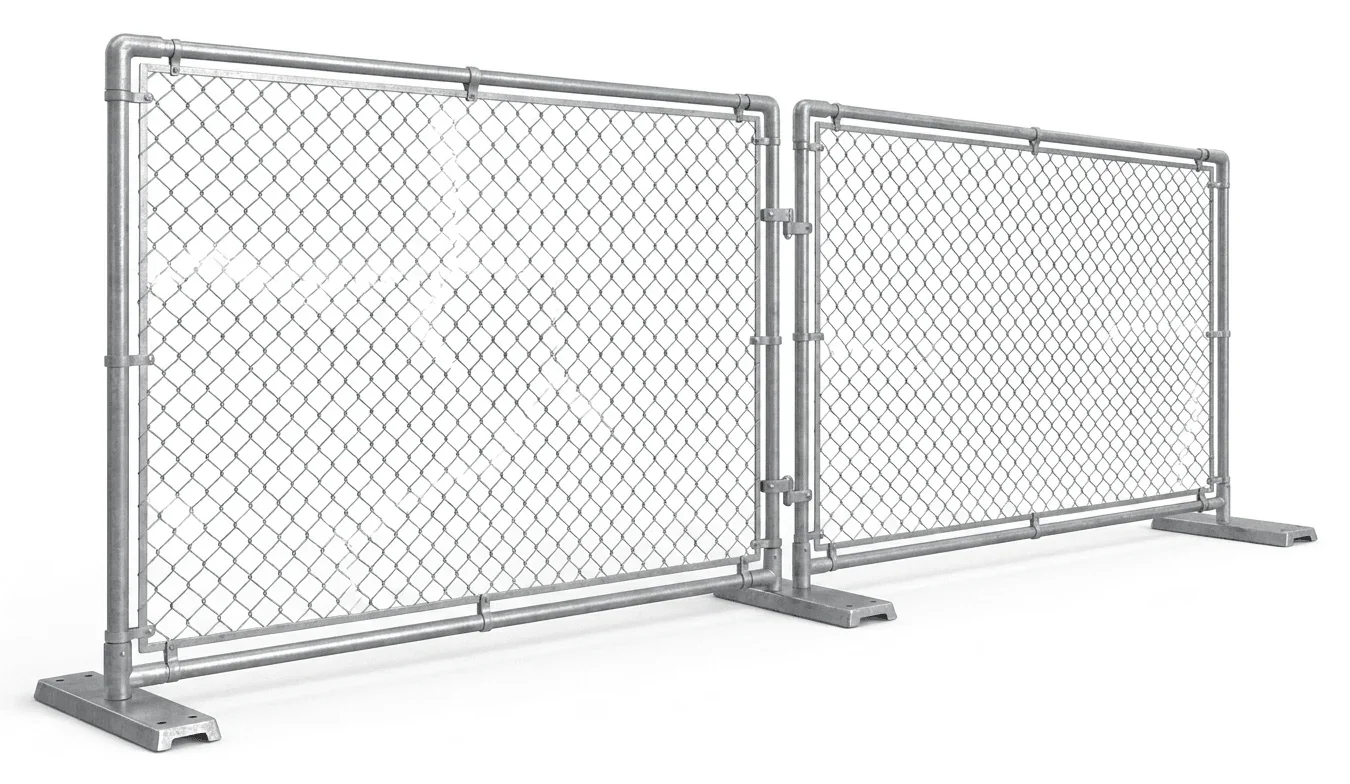
- Perimeter control on mixed or soft ground: heavier-duty panels with stabilizing options suited to uneven grades.
- Work zones with frequent equipment moves: gate modules sized for forklifts or delivery trucks, placed where sightlines are clean.
Related equipment for elevated or exterior tasks
If fencing supports overhead work or façade maintenance, review lift types by surface and reach: - Interior or smooth surfaces: /electric-scissor-lift-rental/ - Rough or unpaved exterior ground: /rough-terrain-scissor-lift-rental/ - Complex reach around building features: /articulating-boom-lift-rental/
Local planning note
Open sites on the North Texas plains experience gusty periods. Long, straight fence runs with solid screening experience higher loads than open-mesh lines; spacing, orientation, and any stabilizing details should follow the product instructions and the site’s procedures.